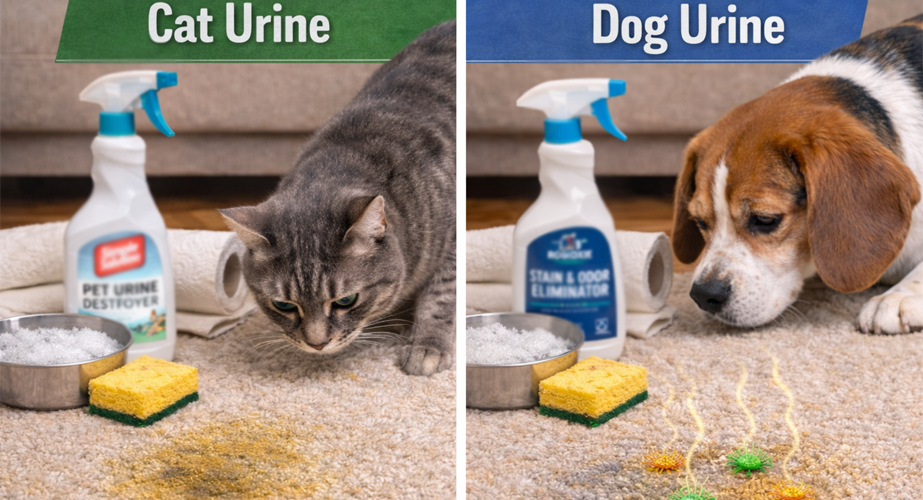
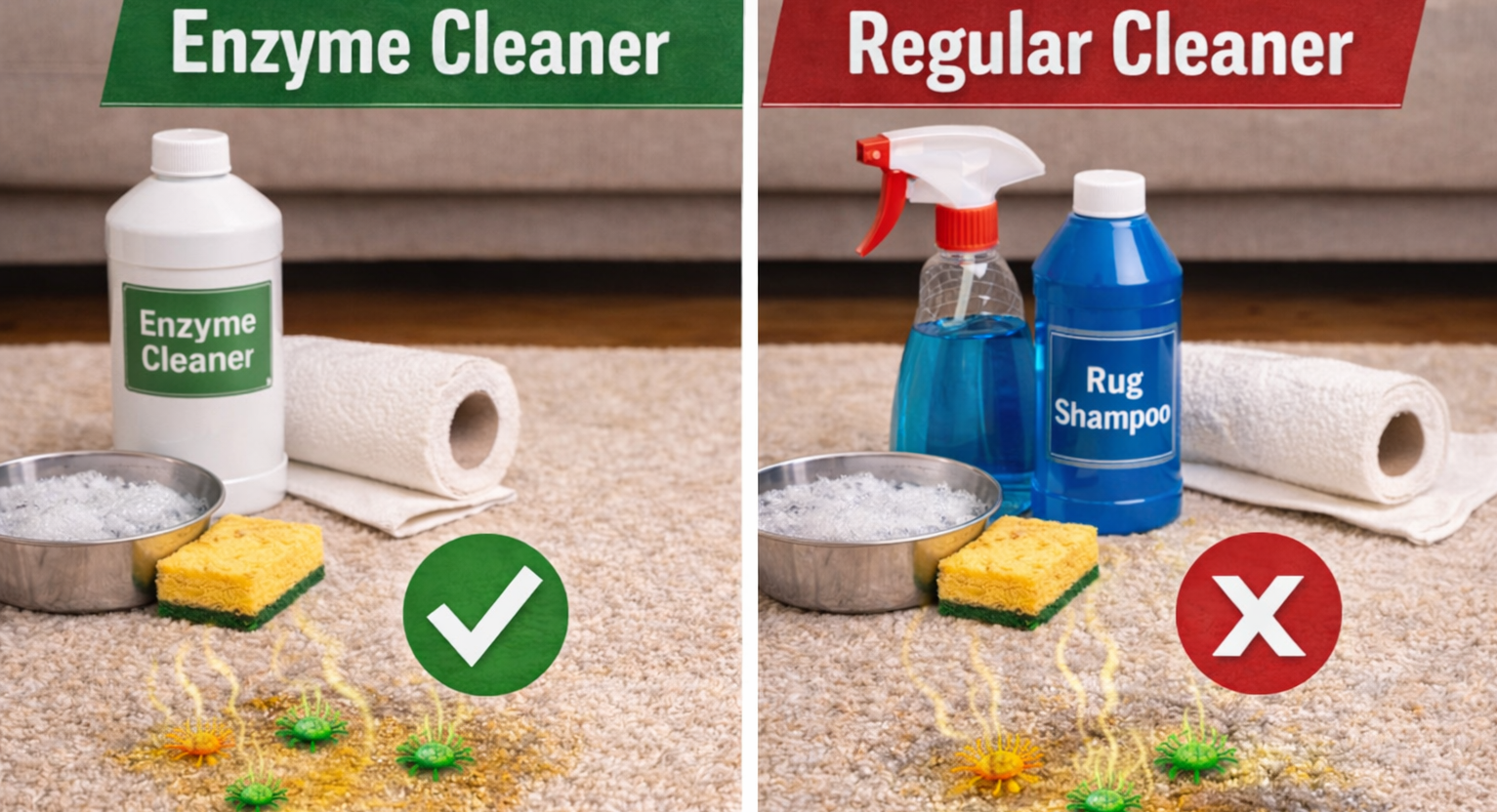
When dealing with pet urine, many people assume that any carpet or rug cleaner will solve the problem. In reality, the type of cleaner you use makes a major difference, especially when odors keep coming back.
This guide explains the difference between enzyme cleaners and regular cleaners, how each works on rugs, and when one is more appropriate than the other.
Why not all rug cleaners work on pet urine
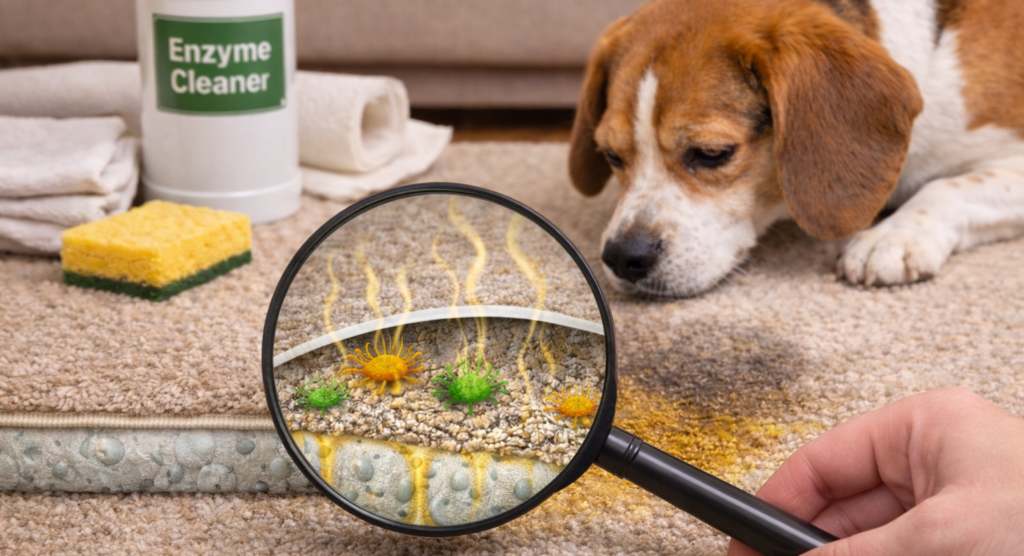
Pet urine is chemically different from typical dirt or spills. It contains uric acid crystals, proteins, and bacteria that bond to rug fibers and backing.
Most standard cleaners are designed to:
Remove surface dirt
Improve appearance
Add fragrance
They are not designed to neutralize uric acid.
How enzyme cleaners work on rugs
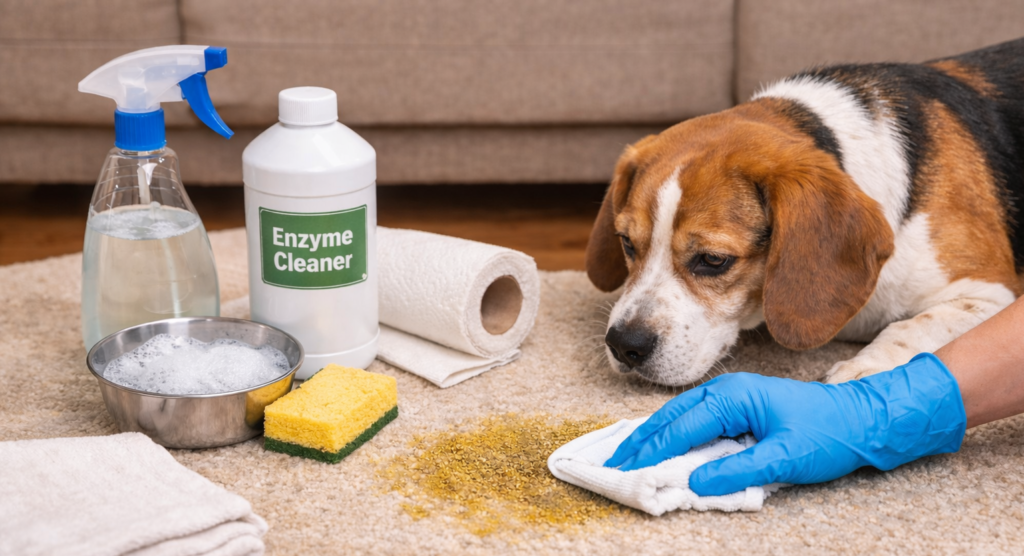
Enzyme cleaners use biological enzymes to break down uric acid crystals and organic waste at a molecular level. Instead of covering odors, they target the source.
Benefits of enzyme cleaners
Break down urine residue instead of masking it
Reduce the chance of odors returning
Effective on fresh and moderate urine stains
Useful for synthetic and blended rugs
Limitations of enzyme cleaners
Require proper dwell time to work
Can fail if rugs dry too quickly
Not always safe for wool, silk, or antique rugs
Overuse can oversaturate rug backing
When used correctly, enzyme cleaners are often the best DIY option for pet urine on synthetic rugs.
How regular rug and carpet cleaners work
Regular rug cleaners rely on detergents, surfactants, and fragrance additives. They loosen and lift dirt and stains from fibers but do not chemically neutralize uric acid crystals.
Benefits of regular cleaners
Improve appearance
Remove general dirt and surface stains
Suitable for routine maintenance cleaning
Limitations of regular cleaners
Do not remove urine crystals
Odors often return after drying
Fragrance fades over time
Can push urine deeper if overused
For pet urine issues, regular cleaners often provide only temporary results.
Why odors come back after using regular cleaners
When regular cleaners are used on urine-contaminated rugs:
Odors may disappear initially
Moisture reactivates urine residue
Fragrance fades
Smells return days or weeks later
This creates the impression that cleaning did not work, when the cleaner simply was not designed for urine removal.
Excess moisture may cause shrinkage or dye bleeding
Low-moisture or dry cleaning methods are often safer
Antique or handwoven rugs
Avoid DIY enzyme and detergent cleaners
Professional rug cleaning is strongly recommended
Common mistakes when using enzyme cleaners
Even good enzyme cleaners can fail when:
Too little product is applied to contaminated areas
Rugs dry too quickly
Heat is used during drying
Cleaner is reapplied repeatedly without drying
Enzymes need time and controlled moisture to work properly.
When neither cleaner type is enough
DIY methods may not work if:
Urine has soaked into rug backing
The rug has been repeatedly soiled
Odors persist after multiple treatments
The rug material is delicate or valuable
In these cases, professional rug cleaning is often the safest and most effective option.
Final thoughts
Enzyme cleaners and regular rug cleaners serve very different purposes. Regular cleaners improve appearance but rarely solve urine odor problems. Enzyme cleaners are designed to break down urine residue, but they must be used carefully and are not suitable for all rug types.
Understanding the difference helps prevent repeated frustration and unnecessary rug damage. Choosing the right cleaner for the right rug makes all the difference.
Affiliate disclosure
This article may contain affiliate links. If you make a purchase through these links, we may earn a commission at no additional cost to you.
 When dealing with pet urine, many people assume that any carpet or rug cleaner will solve the problem. In reality, the type of cleaner you use makes a major difference, especially when odors keep coming back.