Do You Need a Rug Pad? 9 Reasons They’re Worth It
Many homeowners wonder whether a rug pad is really necessary or simply another accessory sold alongside an area rug. While it may seem optional, a quality rug pad can make a noticeable difference in how your rug looks, feels, and performs over time.
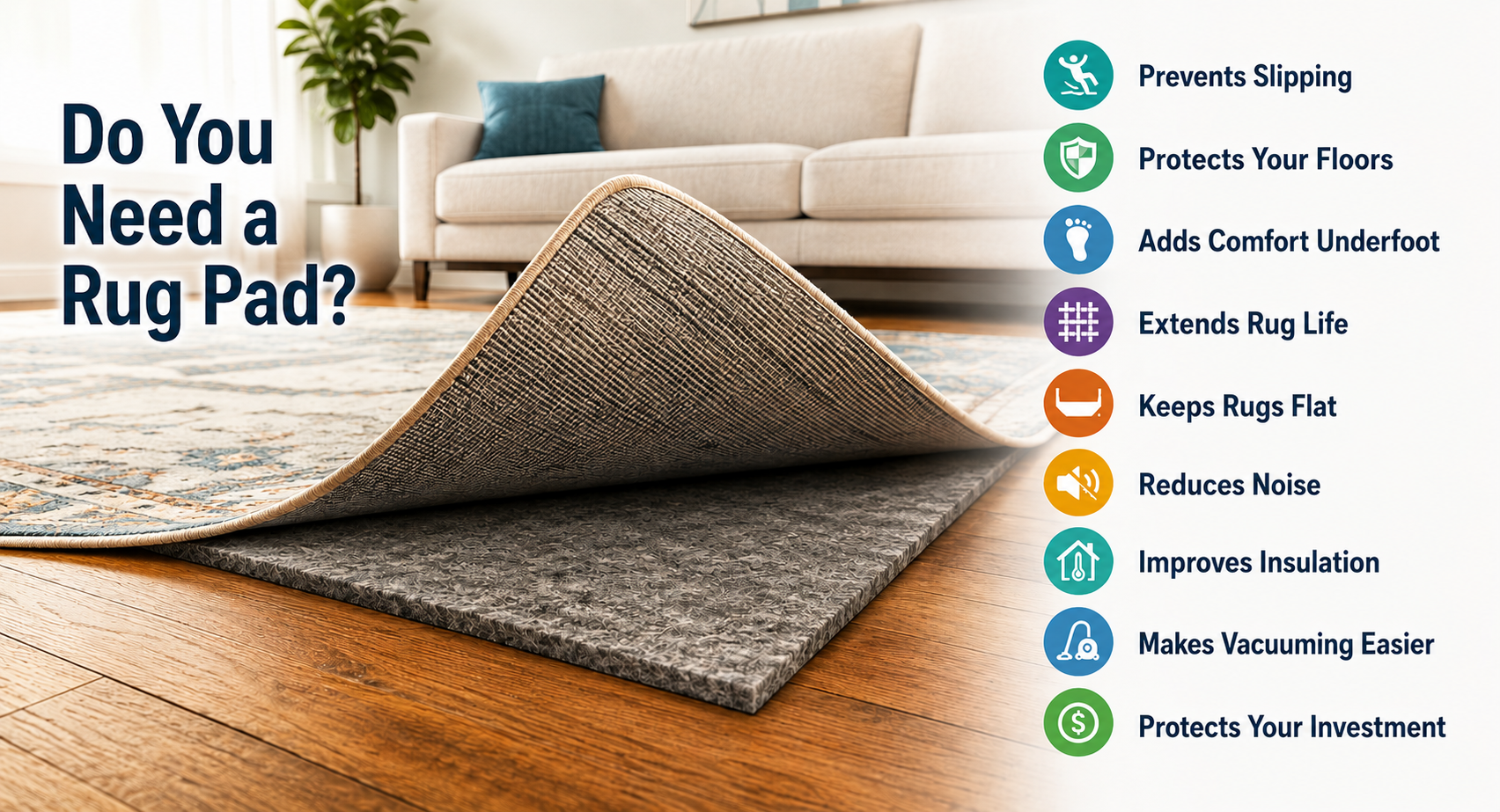
A rug pad does much more than prevent slipping. It helps protect your floors, extends the life of your rug, adds cushioning underfoot, and can even reduce household noise. In many cases, the relatively small cost of a rug pad helps protect a much larger investment.
Table of Contents
- What Is a Rug Pad?
- Do You Really Need a Rug Pad?
- 9 Reasons Rug Pads Are Worth It
- When You May Not Need a Rug Pad
- How to Choose the Right Rug Pad
- Frequently Asked Questions
- Final Thoughts
What Is a Rug Pad?
A rug pad is a protective layer placed underneath an area rug. Depending on the material, it can provide cushioning, improve grip, reduce movement, and help protect both the rug and the flooring underneath.
| Material | Best For | Cushion | Grip |
|---|---|---|---|
| Felt | Large rugs with furniture | ★★★★★ | ★☆☆☆☆ |
| Rubber | Small rugs | ★★☆☆☆ | ★★★★★ |
| Felt + Rubber | Hardwood floors | ★★★★☆ | ★★★★★ |
Browse: Best Rug Pad for Hardwood Floors
Do You Really Need a Rug Pad?
In most homes, yes. A rug pad improves safety, protects flooring, reduces wear on your rug, and makes walking more comfortable. While some rugs can be used without one, most homeowners benefit from adding a quality rug pad.
9 Reasons Rug Pads Are Worth It
1. Prevents Slipping
Rug pads help keep area rugs securely in place, reducing the risk of slips and trips for children, pets, and older adults.
2. Protects Hardwood Floors
Dust and grit trapped beneath a rug can act like sandpaper. A quality rug pad creates a protective barrier that reduces scratches and premature finish wear.
Guide to: Best Rug Pad for Hardwood Floors
3. Makes Rugs Feel Softer
Even a thin rug pad adds comfort underfoot and makes everyday walking or standing noticeably more pleasant.
4. Extends the Life of Your Rug
By reducing friction between the rug and floor, rug pads help minimize fiber wear and maintain the rug’s shape.
5. Keeps Rugs Flat
Proper support helps reduce bunching, wrinkles, curling edges, and shifting during everyday use.
6. Reduces Noise
Rug pads absorb impact and help reduce footstep noise, especially on hardwood floors.
7. Makes Vacuuming Easier
A rug that stays in place is easier to vacuum and provides a more consistent cleaning experience.
8. Improves Insulation
Rug pads add a small layer of thermal insulation that makes floors feel warmer.
9. Protects Your Investment
Quality area rugs are an investment, and a rug pad helps protect both the rug and your flooring.
When You May Not Need a Rug Pad
- Over wall-to-wall carpet.
- Temporary decorative rugs.
- Rugs permanently anchored by heavy furniture.
How to Choose the Right Rug Pad
- Choose the right material for your flooring.
- Select the proper thickness.
- Trim the pad so it is slightly smaller than the rug.
- Use non-slip materials on hard surfaces.
Frequently Asked Questions
Do all area rugs need rug pads?
Most do.
Can rug pads damage hardwood floors?
Quality felt-and-natural-rubber pads are generally safe.
Are thicker rug pads always better?
No. Thickness depends on the application.
Should a rug pad be the same size as the rug?
No. Usually 1-2 inches smaller on each side.
Final Thoughts
For most homeowners, a rug pad is a worthwhile investment. It improves safety, protects flooring, extends the life of your rug, and adds comfort.
Best Rug Pad for Hardwood Floors (Protect Your Floors Without Damaging Them)