How to Clean a Rug at Home (Step-by-Step Guide for Safe Results)
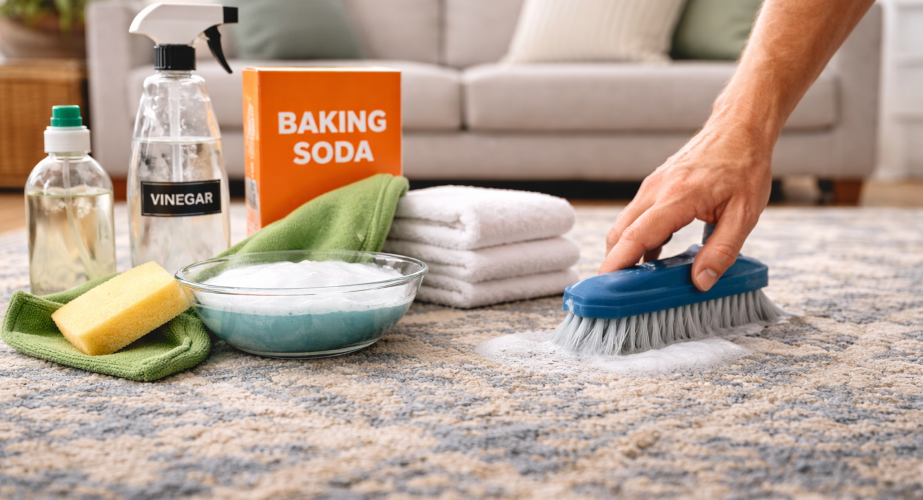 Rugs add warmth, comfort, and style to a home, but they also collect dust, dirt, and stains over time. While professional cleaning is sometimes necessary, many rugs can be safely cleaned at home using the right methods.
This guide walks you through a safe, practical approach to DIY rug cleaning, including what works, what to avoid, and when it’s better to leave cleaning to a professional.
Before You Start: Know Your Rug Type
Not all rugs can be cleaned the same way. Before using any cleaning method, identify your rug material:
- Synthetic rugs (polypropylene, polyester, nylon) are generally more durable and easier to clean
- Wool rugs require low-moisture methods and gentle handling
- Delicate or antique rugs should not be cleaned aggressively at home
If you’re unsure which cleaner is safe for your rug type, review our guides on cleaners designed for wool rugs and safe options for synthetic rugs.
Step 1: Vacuum Thoroughly
Start by vacuuming both sides of the rug if possible. This removes loose dirt and debris that can interfere with cleaning.
- Use a vacuum without a beater bar for delicate rugs
- Pay extra attention to edges and high-traffic areas
Step 2: Spot Test First
Before applying any cleaning solution, test a small hidden area of the rug to check for color bleeding or fiber damage.
This step is especially important for wool and dyed rugs.
Step 3: Use a Mild Cleaning Solution
For general cleaning, a mild solution is usually sufficient:
- Mix a small amount of gentle detergent with water
- Avoid strong chemicals, bleach, or high-alkaline cleaners
Apply the solution lightly using a sponge or soft brush. Avoid soaking the rug.
Step 4: Gently Clean in Sections
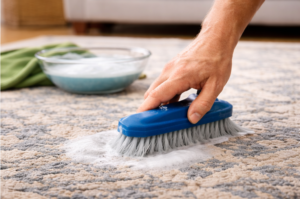
Work in small areas using light pressure:
- Blot instead of scrubbing when possible
- Avoid aggressive brushing, especially on natural fibers
- Do not over-wet the rug
For tougher stains, use a cleaner appropriate for the rug type. For example, pet-related stains may require specialized treatment. You can learn more in our guide to removing pet urine from rugs safely.
Step 5: Rinse Carefully
If needed, lightly rinse the cleaned area with a small amount of clean water to remove residue.
Avoid pouring water directly onto the rug, as excess moisture can soak into the backing and lead to odor or damage.
Step 6: Blot and Remove Moisture
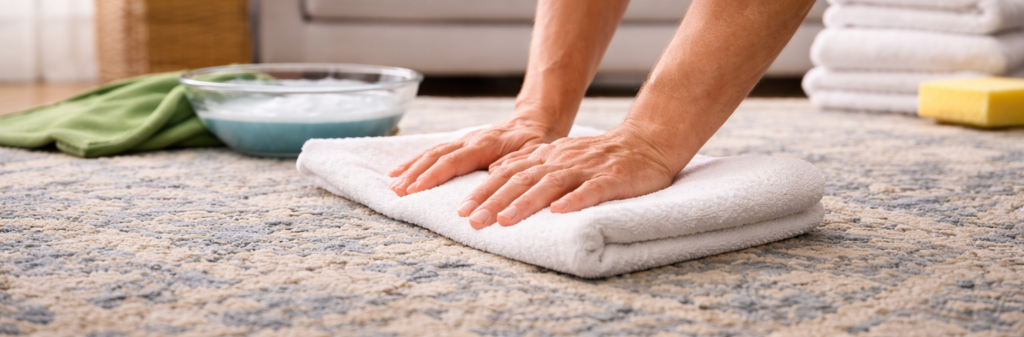
Use clean towels to blot as much moisture as possible.
- Press firmly to absorb water
- Repeat with dry towels as needed
Step 7: Dry the Rug Completely
Proper drying is critical to prevent odors and mold growth.
- Allow the rug to air dry fully
- Use fans or open windows to increase airflow
- Avoid heat sources like hair dryers or heaters
The rug should be completely dry before placing it back on the floor.
Optional: Deodorize with Baking Soda
For mild odors, sprinkle baking soda over the rug once it is dry. Let it sit for several hours before vacuuming.
This can help neutralize surface odors without adding moisture.
What to Avoid When Cleaning Rugs at Home
Some common DIY methods can actually damage rugs:
- Over-saturating the rug with water
- Using steam cleaners on wool rugs
- Applying vinegar or ammonia-based solutions
- Scrubbing aggressively
- Using heat to speed up drying
These mistakes can lead to shrinkage, dye bleeding, or long-term odor issues.
When DIY Rug Cleaning Is Not Enough
At-home cleaning may not be effective if:
- Odors keep returning after cleaning
- Stains have soaked into the rug backing
- The rug is wool, silk, antique, or handwoven
- The rug has been heavily soiled over time
In these cases, professional rug cleaning is often the safest option.
Final Thoughts
Cleaning a rug at home can be effective when done carefully and with the right approach. Understanding your rug type, using minimal moisture, and avoiding harsh methods are key to preventing damage.
When in doubt, it’s better to take a conservative approach or consult a professional rather than risk permanent damage.