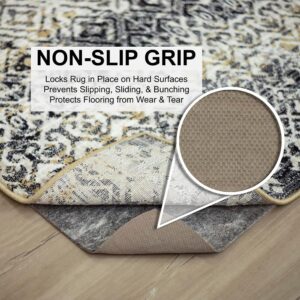
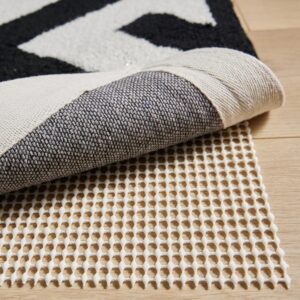
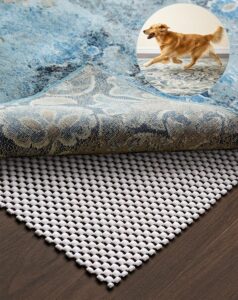
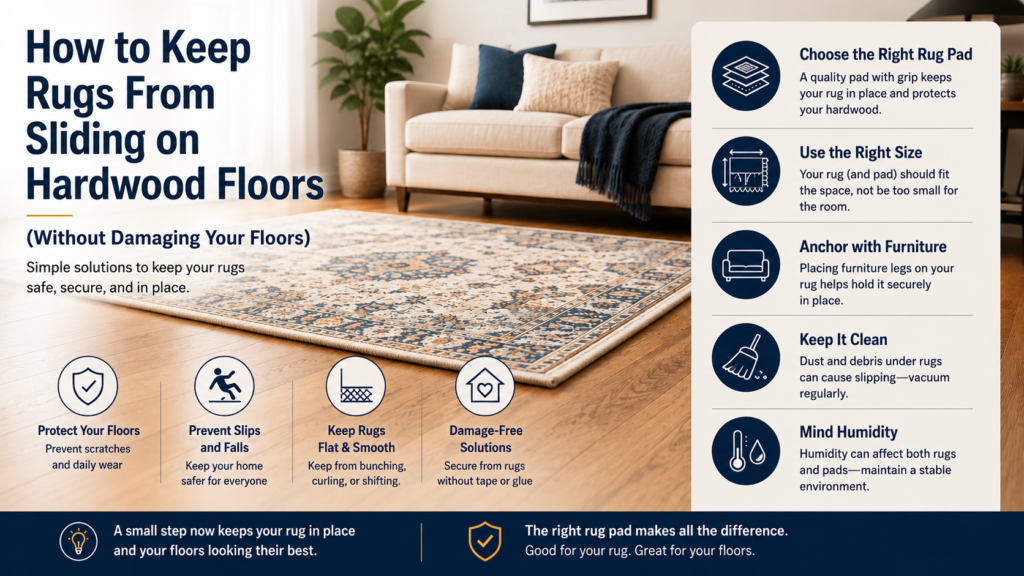
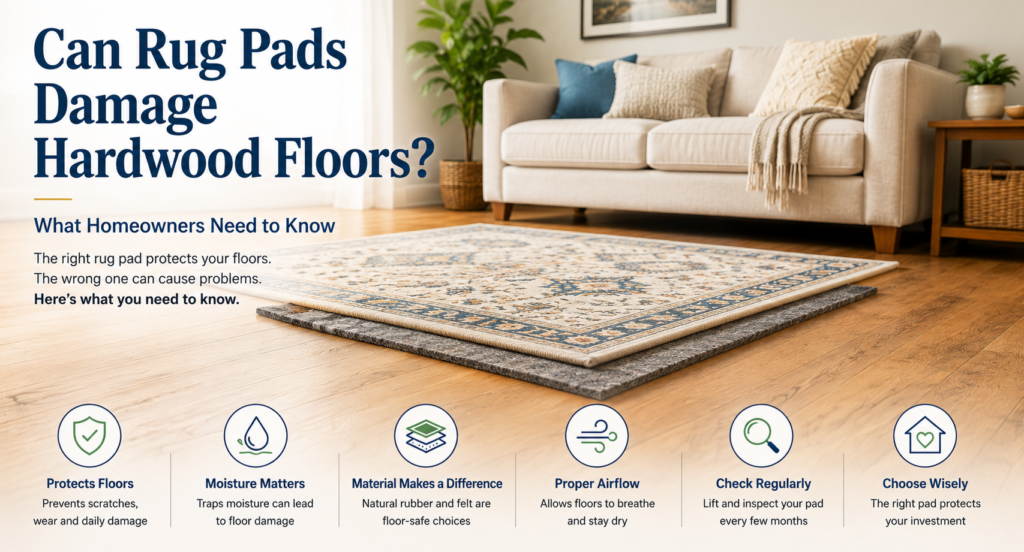
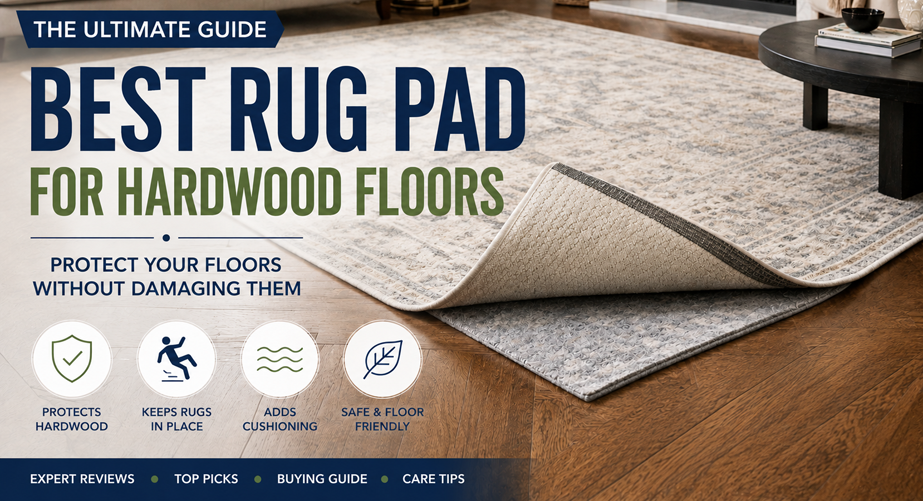
Choosing the right rug pad is just as important as choosing the right area rug. While many homeowners focus on color, size, or style, the wrong rug pad can scratch hardwood floors, leave discoloration, trap moisture, or allow rugs to slide out of place. A quality rug pad not only protects your flooring investment but also extends the life of your rug and makes it more comfortable underfoot.
Whether you’re decorating a living room, bedroom, hallway, or dining room, selecting the proper rug pad depends on several factors, including your flooring type, rug material, traffic level, and whether you need extra cushioning or maximum grip.
In this guide, we’ll explain what to look for in a rug pad, compare several highly rated Amazon options, discuss which materials are safest for hardwood flooring, and help you avoid common mistakes that could damage your floors over time.
All products discussed in this guide are commonly available through Amazon. Availability and specifications may change over time.
At a Glance
Feature
Recommendation
Best Floor Protection:
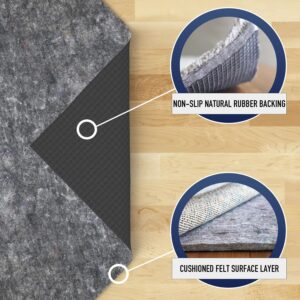
Natural rubber and felt combination pads
Best for Preventing Slipping:
Rubber-backed rug pads
Best for Thick Area Rugs:
Dense felt pads
Best for High Traffic Areas:
Felt + rubber combination pads
Best for Delicate Hardwood Floors:
Natural rubber rug pads without adhesives
Why You Need a Rug Pad Under an Area Rug
Many people assume a rug pad is optional. While it’s possible to place an area rug directly on hardwood flooring, doing so can increase wear on both the rug and the floor beneath it. Over time, everyday foot traffic causes rugs to shift slightly, creating friction that may dull floor finishes or wear down rug fibers.
A properly selected rug pad creates a protective barrier between the rug and the floor while improving comfort and stability.
Protects Hardwood Floors
Hardwood floors are a significant investment. Even small amounts of movement between the rug and the floor can gradually wear away protective finishes. A quality rug pad helps reduce friction while cushioning the rug against daily use.
Prevents Slipping
One of the primary reasons homeowners purchase rug pads is to improve safety. Rugs that slide easily can become tripping hazards, especially in hallways, entryways, or homes with children, older adults, or pets.
Non-slip rug pads help keep rugs securely in place while still allowing them to be lifted for routine cleaning.
Extends the Life of Your Rug
Every step placed on a rug creates pressure on the fibers. Without a rug pad absorbing some of that impact, fibers wear down faster, causing the rug to lose its appearance sooner than expected.
By adding a supportive layer underneath, the rug experiences less stress and generally maintains its shape and texture for a longer period.
Adds Comfort
Beyond protection, rug pads make rugs noticeably more comfortable to walk on. Even thinner area rugs can feel softer and more substantial when paired with the right pad.
This added cushioning is especially appreciated in living rooms, bedrooms, and spaces where people frequently stand or walk barefoot.
Improves Air Circulation
Some rug pads create small channels that allow airflow beneath the rug. Better ventilation can help reduce trapped moisture and may contribute to healthier long-term rug maintenance, particularly in humid environments.
What Makes a Rug Pad Safe for Hardwood Floors?
Not every rug pad is suitable for hardwood flooring. Some inexpensive pads contain chemicals or synthetic materials that may react with certain floor finishes over time.
When shopping for a hardwood-safe rug pad, consider the following characteristics.
Natural Rubber Instead of PVC
Natural rubber is generally preferred because it provides excellent grip without relying on adhesives. It is also less likely to leave residue compared to some lower-quality synthetic materials.
Tip: Always verify compatibility with your flooring manufacturer’s recommendations, especially if you have engineered hardwood or specialty finishes.
Dense Felt Construction
Felt provides cushioning while helping distribute weight more evenly across the floor. Combination felt-and-rubber pads often provide the best balance of grip and comfort.
No Adhesives
A quality rug pad should rely on its material composition rather than sticky adhesives to remain in place. Adhesive products may leave residue behind or become difficult to remove over time.
Proper Thickness
Thickness affects both comfort and stability.
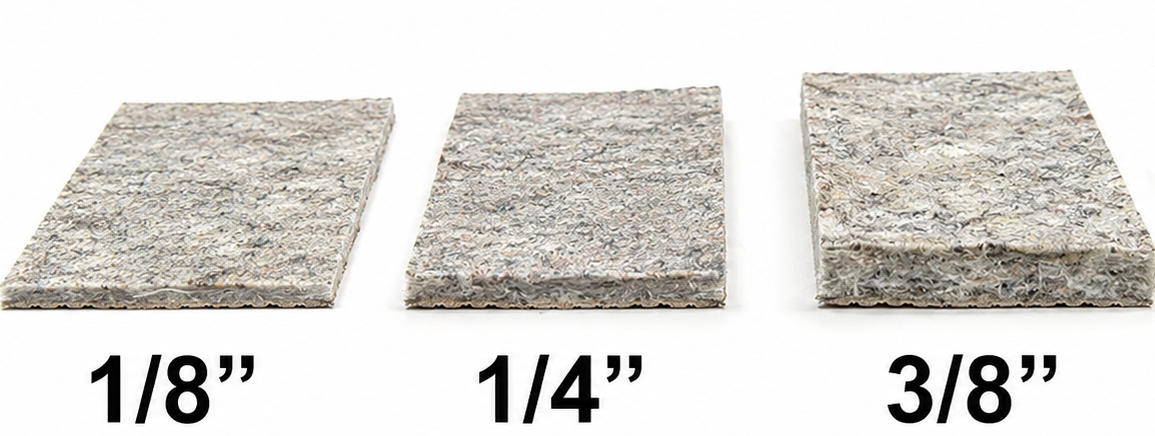
Approximately 1/8″ works well for dining rooms and lower-clearance areas.
1/4″ offers an excellent balance for most living spaces.
Thicker options may be appropriate beneath larger rugs in bedrooms or family rooms where extra cushioning is desired.
Types of Rug Pads Explained
Understanding the different types of rug pads makes it easier to choose one that matches both your flooring and your lifestyle.
Felt Rug Pads
Felt pads provide cushioning and help reduce wear but generally offer minimal grip on smooth hardwood floors unless paired with a rubber backing.
Best for:
Large furniture anchoring the rug
Extra comfort
Noise reduction
Natural Rubber Rug Pads
Natural rubber provides excellent traction while remaining flexible and durable. It is one of the safest materials for helping prevent rugs from sliding on hardwood flooring.
Best for:
Hallways
Entryways
High traffic rooms
Felt + Rubber Combination Pads
Combination pads are widely considered the best overall option because they combine the comfort of felt with the grip of natural rubber.
For most homeowners, this style offers the best balance between floor protection, stability, and longevity.
PVC and Synthetic Foam Pads
These budget-friendly options can provide grip but vary considerably in quality. Some lower-quality materials have been reported to discolor certain floor finishes over extended periods.
If choosing this type of pad, carefully review both the manufacturer’s instructions and your flooring manufacturer’s recommendations.
Comparing the Best Rug Pads for Hardwood Floors
If you’re short on time, the table below provides a quick comparison of our recommended rug pads. Each product excels in a different area, so the best choice depends on your flooring, rug type, and personal preferences.
Each of these products is commonly available through Amazon and serves a different purpose. Rather than simply choosing the most expensive option, consider how and where your rug will be used.
Best for: Homeowners looking for the best balance of floor protection, grip, durability, and comfort.
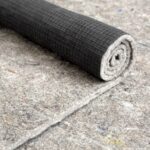
If you only purchase one rug pad for hardwood floors, this is the one we recommend most often. The Superior-Lock Natural combines dense felt cushioning with a natural rubber backing, creating a pad that helps keep rugs securely in place while protecting hardwood finishes from everyday wear.
Unlike many inexpensive pads that rely entirely on synthetic materials, this design focuses on providing grip without adhesives. The felt layer also helps absorb impact, reducing stress on both the rug and the flooring underneath.
Why We Like It
Excellent balance of grip and cushioning.
Natural rubber backing helps reduce slipping.
Dense felt protects hardwood floors from abrasion.
Available in numerous sizes and can be trimmed for a custom fit.
Works well beneath both large and medium-sized area rugs.
Things to Consider
Premium materials generally come at a higher price than basic rug pads.
Not intended for outdoor use.
Always verify compatibility with specialty floor finishes.
Who Should Buy It?
This is an excellent choice for homeowners who want one high-quality rug pad that can remain under a rug for years without sacrificing grip or comfort. It is particularly well suited for living rooms, family rooms, dining rooms, and bedrooms where rugs experience regular foot traffic.
Best for: Homeowners who want dependable performance without spending premium prices.
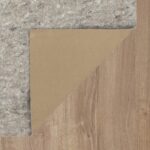
The Mohawk Home Dual Surface Rug Pad has been a popular choice for many years because it combines felt cushioning with a latex rubber backing at a price point that fits most budgets. It offers many of the same benefits as premium rug pads while remaining more affordable.
For many households, this represents the sweet spot between cost and performance.
Why We Like It
Excellent value for the money.
Provides comfortable cushioning underfoot.
Helps reduce rug movement on hardwood floors.
Suitable for many common room sizes.
Easy to trim for custom installations.
Things to Consider
Grip may not be quite as strong as premium natural rubber pads.
Very heavy rugs may benefit from a thicker option.
Always follow the flooring manufacturer’s care recommendations.
Who Should Buy It?
This pad is a great option for homeowners furnishing multiple rooms who want reliable floor protection without purchasing premium pads for every rug.
It performs especially well beneath medium-sized rugs in bedrooms, living rooms, and home offices.
Rather than recommending products based solely on popularity, we considered several factors that matter when choosing a rug pad for hardwood flooring.
Material composition and compatibility with hardwood floors
Grip and slip resistance
Cushioning and comfort
Durability for long-term use
Availability in multiple sizes
Manufacturer reputation
Overall value for typical homeowners
We also prioritize products that are widely available and suitable for a variety of rug styles instead of recommending niche products that may be difficult to find in the future.
More Recommended Rug Pads for Hardwood Floors
While premium felt-and-rubber rug pads are often the best choice for most homeowners, there are situations where a more affordable or specialized option may be a better fit. Below are two additional recommendations that stand out for specific needs.
Best for: Smaller rugs, runners, apartments, and homeowners looking for an affordable non-slip solution.
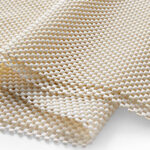
If your primary goal is preventing rugs from sliding rather than adding cushioning, the Gorilla Grip Original Rug Gripper is worth considering. Its open-grid design promotes airflow beneath the rug while providing traction on many smooth flooring surfaces.
Unlike thicker felt pads, this style adds very little height, making it a practical choice beneath entryway rugs, kitchen rugs, and hallway runners where door clearance is limited.
Why We Like It
Affordable option for smaller rugs.
Excellent slip resistance.
Thin profile works well beneath doors.
Easy to trim with household scissors.
Promotes airflow beneath the rug.
Things to Consider
Provides minimal cushioning.
Not intended for heavy area rugs that require additional support.
May not provide enough padding for larger living room rugs.
Who Should Buy It?
If you simply want to stop a lightweight rug from sliding across hardwood flooring, this is an affordable solution that performs well without adding unnecessary thickness.
Best for: Large living room rugs, dining room rugs, synthetic area rugs, and oversized area rugs.
Larger rugs require consistent support across a greater surface area. The Veken Non-Slip Rug Pad is available in numerous sizes, making it easier to match larger rugs without piecing multiple pads together.
Its open-grid construction helps improve airflow while reducing rug movement during everyday use.
Why We Like It
Available in many large sizes.
Good grip for oversized rugs.
Simple to trim for custom installations.
Works well beneath synthetic area rugs.
Things to Consider
Offers limited cushioning compared to felt pads.
Not the best choice if comfort is your highest priority.
Always confirm compatibility with your flooring manufacturer’s recommendations.
Who Should Buy It?
This pad is an excellent choice for homeowners installing large area rugs where preventing movement is more important than adding significant cushioning.
Choosing a rug pad isn’t simply about buying the thickest or most expensive option. The best rug pad depends on your flooring, the type of rug you own, how the room is used, and the amount of traffic the rug receives.
Step 1: Consider Your Flooring
This guide focuses on hardwood floors, but many homes also have engineered hardwood, laminate, luxury vinyl plank (LVP), or tile.
Each flooring manufacturer may have specific recommendations regarding rug pad materials. Before purchasing any rug pad, review your flooring warranty or care instructions to ensure compatibility.
Step 2: Match the Pad to the Rug
Heavier rugs often benefit from felt-and-rubber combination pads because they provide both cushioning and grip.
Lighter rugs and runners generally need more grip than cushioning, making thinner non-slip pads a practical choice.
Step 3: Choose the Right Thickness
Thickness affects both comfort and functionality.
Thickness
Best For
1/8 inch
Dining rooms, hallways, door clearance
1/4 inch
Most living rooms and bedrooms
3/8 inch
Maximum comfort under larger rugs
Tip: Most homeowners will be happiest with a 1/4-inch felt-and-rubber rug pad. It offers the best balance of cushioning, stability, and door clearance for living rooms and bedrooms.
Step 4: Buy the Correct Size
A rug pad should generally be slightly smaller than the rug itself.
A good rule of thumb is to leave approximately one inch of rug exposed around all four edges. This helps prevent the pad from being visible while allowing the rug edges to lay flat.
Step 5: Think About the Room
Different rooms have different needs.
Living Room: Comfort and durability.
Bedroom: Extra cushioning.
Dining Room: Lower profile for easier chair movement.
Hallway: Maximum grip.
Entryway: Thin non-slip construction.
Common Mistakes to Avoid
Buying the Wrong Material
Not every rug pad is intended for hardwood flooring. Selecting the wrong material can increase the risk of discoloration or reduced grip.
Buying a Pad That’s Too Large
A rug pad extending beyond the edges of the rug creates a tripping hazard and can make the installation look unfinished.
Ignoring Floor Manufacturer Recommendations
Some hardwood finishes have specific care requirements. Always verify that the rug pad you choose is appropriate for your flooring.
Replacing the Rug but Keeping an Old Pad
Rug pads wear over time. If your existing pad has become compressed, brittle, or damaged, replacing it when purchasing a new rug is often worthwhile.
Choosing Price Over Quality
While inexpensive rug pads may seem appealing, higher-quality materials often provide better floor protection and last significantly longer.
How to Measure a Rug Pad Correctly
One of the most common mistakes homeowners make is purchasing a rug pad that is exactly the same size as their area rug. While it may seem logical, a rug pad should actually be slightly smaller than the rug so it remains hidden beneath the edges.
As a general rule, choose a rug pad that is approximately 1 to 2 inches shorter on each side than your rug. This allows the rug edges to rest directly on the floor while the pad stays concealed underneath.
Example
8′ × 10′ rug → Trim the rug pad to approximately 7’10” × 9’10”
5′ × 8′ rug → Trim the rug pad to approximately 4’10” × 7’10”
Most quality rug pads can easily be trimmed using a sharp utility knife or heavy-duty scissors. Trim the pad before placing it beneath the rug to achieve the best fit.
Should Every Rug Have a Rug Pad?
In most situations, yes.
While there are exceptions, adding a rug pad provides benefits beyond preventing slipping. It protects flooring, reduces wear on the rug, improves comfort, and often helps the rug maintain its appearance over time.
Rug pads are especially beneficial when:
The rug is placed on hardwood flooring.
The room receives frequent foot traffic.
Children or pets regularly use the space.
The rug is expensive or intended to last for many years.
You may not need a thick rug pad beneath every rug, but some level of floor protection is usually worthwhile.
How We Chose Our Recommendations
Every product featured in this guide was selected using the same evaluation criteria. Rather than recommending products simply because they are popular, we focused on characteristics that matter when protecting hardwood flooring.
Our evaluation considered:
Compatibility with hardwood flooring
Material quality
Grip without adhesives
Cushioning and comfort
Ease of trimming and installation
Availability in multiple sizes
Manufacturer reputation
Overall value for homeowners
We also favor products that have remained consistently available over time, making it easier for readers to purchase replacement pads or additional sizes in the future.
Whenever possible, we recommend materials that help reduce the risk of scratching, slipping, or trapping excess moisture beneath area rugs.
Felt vs. Rubber: Which Material Is Better?
This is one of the most common questions homeowners ask.
The answer depends on what you’re trying to accomplish.
Feature
Felt
Natural Rubber
Comfort
★★★★★
★★☆☆☆
Grip
★★☆☆☆
★★★★★
Floor Protection
★★★★★
★★★★☆
Best for Heavy Rugs
★★★★★
★★★☆☆
Best for Lightweight Rugs
★★☆☆☆
★★★★★
For most hardwood floors, a combination felt-and-rubber rug pad offers the best balance of comfort, grip, and long-term protection.
Can Rug Pads Damage Hardwood Floors?
A quality rug pad that is compatible with your flooring should help protect hardwood rather than damage it. Problems typically occur when low-quality materials are used or when moisture becomes trapped beneath the rug.
Potential causes of damage include:
Low-quality PVC materials
Adhesive-backed products
Moisture trapped beneath rugs
Lack of routine cleaning beneath the rug
We recommend lifting rugs periodically to vacuum underneath and inspect both the rug pad and the floor for any signs of trapped dirt or moisture.
The lifespan of a rug pad depends on the material, room conditions, and amount of foot traffic.
Material
Typical Lifespan
Natural Rubber + Felt
Approximately 8–15 years
PVC / Foam
Approximately 3–7 years
Regular inspections can help identify when a rug pad has become compressed, brittle, or less effective at preventing movement.
Signs It’s Time to Replace Your Rug Pad
Your rug begins sliding more than usual.
The pad has become brittle or cracked.
You notice uneven wear beneath the rug.
The pad has permanently compressed.
You detect odors or signs of moisture damage.
You’re replacing the rug with a new one.
Replacing an aging rug pad is a relatively inexpensive way to help extend the life of both your rug and your flooring.
Frequently Asked Questions
Should a rug pad be smaller than the rug?
Yes. A rug pad should generally be 1 to 2 inches smaller than the rug on all sides. This helps keep the pad hidden beneath the rug while allowing the edges of the rug to lay flat against the floor.
Can a rug pad scratch hardwood floors?
A quality rug pad designed for hardwood floors should help protect the floor rather than scratch it. Problems are more likely to occur with low-quality materials, trapped dirt, or pads that are not compatible with your floor finish. Periodically lifting the rug and vacuuming underneath can help prevent abrasive debris from accumulating.
What is the safest rug pad material for hardwood floors?
For most homes, felt-and-natural-rubber combination pads offer an excellent balance of floor protection, grip, and cushioning. Always verify compatibility with your flooring manufacturer’s recommendations, especially for engineered hardwood or specialty finishes.
Can I use the same rug pad on luxury vinyl plank (LVP) flooring?
Some rug pads are suitable for luxury vinyl plank flooring, while others may not be recommended by the flooring manufacturer. Always review your flooring warranty and care instructions before selecting a rug pad.
How often should I replace a rug pad?
Many high-quality rug pads last for years, but lifespan depends on the material, room conditions, and amount of foot traffic. Replace a rug pad if it has become brittle, compressed, damaged, or no longer keeps the rug securely in place.
Can I stack two rug pads together?
Stacking rug pads is generally not recommended. Doing so can reduce stability and increase the likelihood of the rug shifting underfoot. If additional cushioning is desired, choose a thicker pad instead.
Will a rug pad make my rug feel softer?
Yes. Felt and felt-and-rubber rug pads provide additional cushioning that can make walking on an area rug noticeably more comfortable.
Can I cut a rug pad to fit my rug?
Yes. Most rug pads can be trimmed using heavy-duty scissors or a sharp utility knife. It’s best to trim the pad before placing it beneath the rug to ensure an accurate fit.
Are thicker rug pads always better?
Not necessarily. While thicker pads provide more cushioning, they may not be appropriate for every room. Dining rooms, hallways, and areas with limited door clearance often benefit from thinner rug pads.
Do heavy rugs still need a rug pad?
Yes. Even large, heavy rugs benefit from a rug pad because it helps reduce wear, protects the flooring, improves comfort, and minimizes movement over time.
Our Final Recommendations
Choosing the best rug pad ultimately depends on your rug, your flooring, and how the room is used. While each of the products featured in this guide performs well in different situations, a few stand out for specific needs.
If you’re looking for one recommendation that balances grip, cushioning, durability, and long-term hardwood floor protection, the RUGPADUSA Superior-Lock Natural is our top pick for most homeowners.
If your priority is maximizing value while still receiving excellent performance, the Mohawk Home Dual Surface Felt + Latex remains an outstanding choice.
No matter which rug pad you choose, proper sizing, regular cleaning beneath the rug, and following your flooring manufacturer’s recommendations will go a long way toward protecting both your rug and your hardwood floors.
Affiliate disclosure
This article may contain affiliate links. If you make a purchase through these links, we may earn a commission at no additional cost to you.
Can Rug Pads Damage Hardwood Floors? June 22, 2026 Many homeowners worry that placing a rug pad beneath an area rug could stain, discolor, or permanently damage their hardwood floors. While this concern is…
 Felt Rug Pads
 Felt Rug Pads