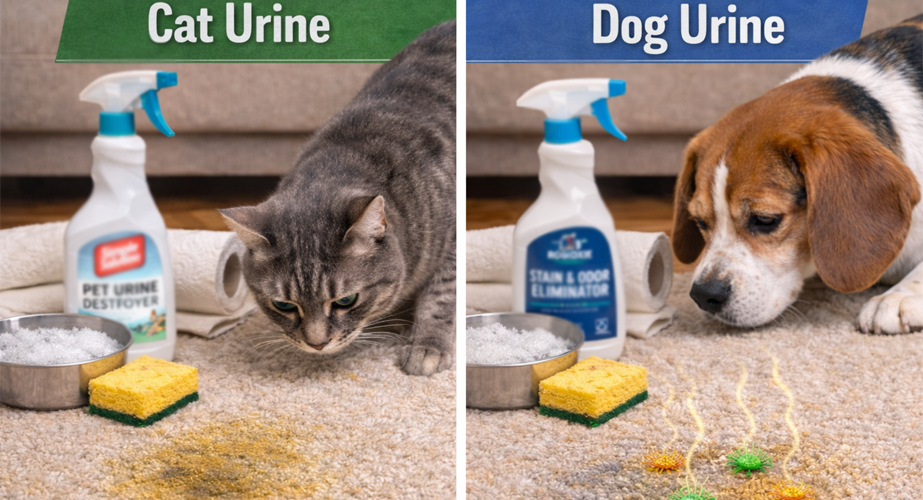
Cat urine is one of the most difficult odors to remove from rugs. Even after cleaning, the smell often returns stronger and more persistent than dog urine. This is because cat urine has a higher concentration of uric acid and ammonia compounds that bond aggressively to rug fibers and backing.
This guide explains why cat urine is different, which rug cleaners work best, what to avoid, and when professional cleaning may be the safest option.
Why cat urine is harder to remove from rugs
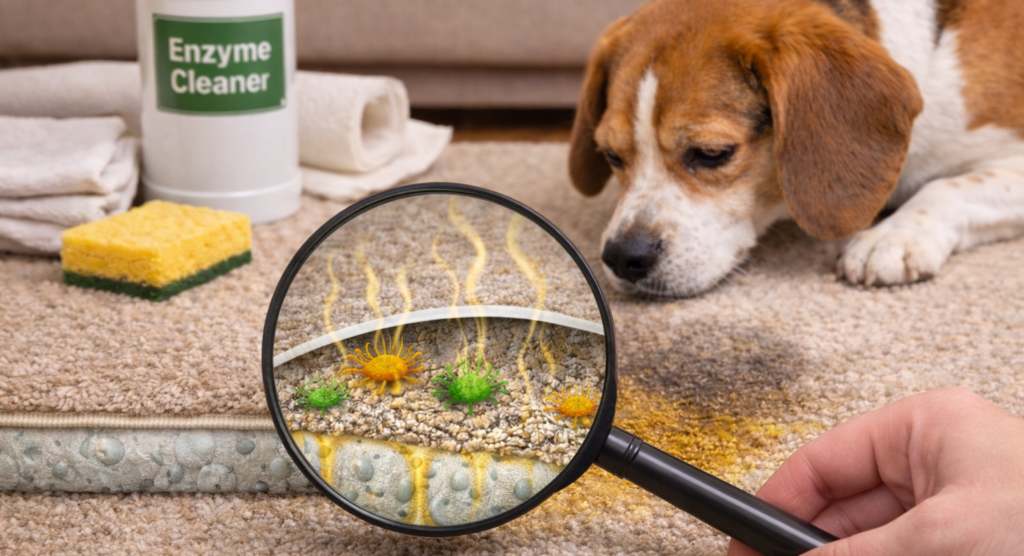
Cat urine is more concentrated than dog urine and contains stronger odor-causing compounds. Once it dries, uric acid crystals remain embedded in rug fibers and backing.
When moisture is reintroduced, even months later, the odor can resurface.
This is especially problematic for:
Dense or thick area rugs
Rugs with absorbent backing
Wool or natural fiber rugs
Rugs placed on padding or wood floors
Why regular rug cleaners usually fail on cat urine
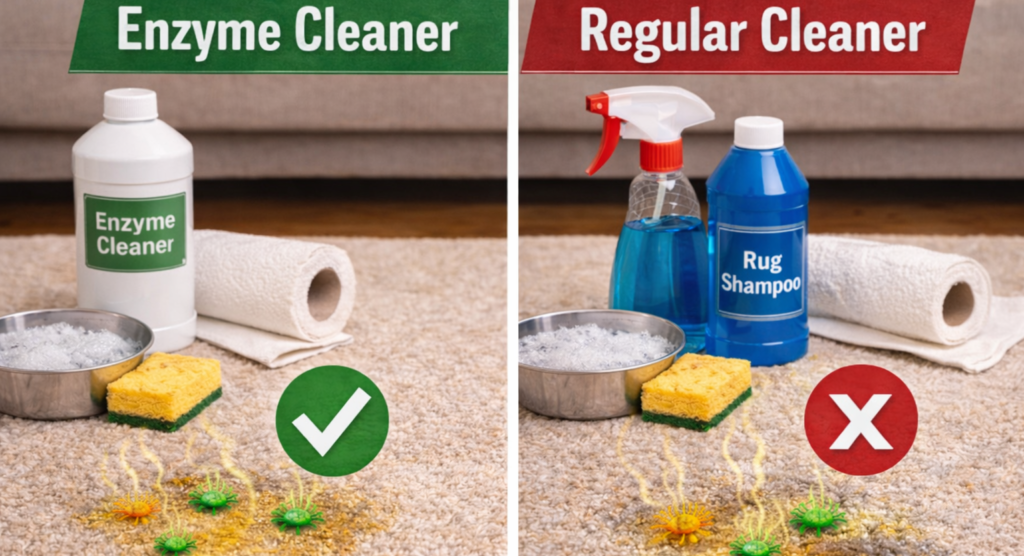
Most standard rug and carpet cleaners are designed to remove surface dirt and add fragrance. They do not neutralize uric acid crystals.
As a result:
Odors may seem gone initially
Smells return once the rug dries
Fragrance fades and exposes the odor again
This is why cat urine problems often require enzyme-based cleaners or professional treatment.
What makes a rug cleaner effective for cat urine
An effective cat urine rug cleaner should:
Break down uric acid crystals using enzymes
Be safe for area rugs when used correctly
Allow controlled moisture application
Avoid harsh chemicals that damage fibers or dyes
Enzyme-based cleaners are usually the best DIY option, but they must be used carefully.
Below are commonly used cleaner types for cat urine problems. Always spot test before use and follow manufacturer instructions.
Enzyme-based cleaners
Best for: Fresh and moderate cat urine stains Rug types: Synthetic and blended rugs
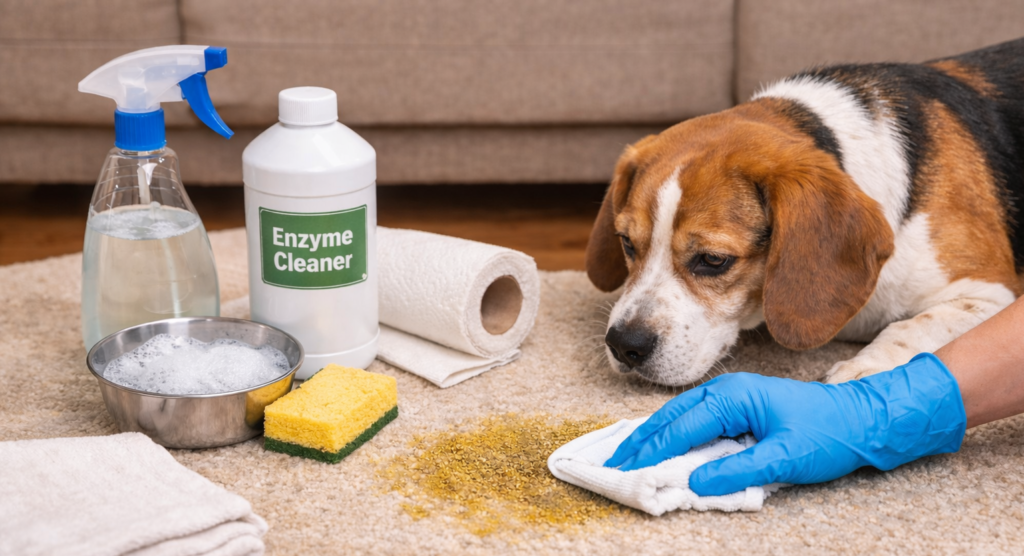
Enzyme cleaners break down urine residue rather than masking odors. They require proper dwell time and controlled moisture to be effective.
Important considerations:
Do not oversaturate the rug
Avoid heat during drying
Allow full dwell time before blotting
Dry cleaning powders (safer for wool rugs)
Best for: Light cat urine odors and maintenance cleaning Rug types: Wool and natural fiber rugs
Dry cleaning powders reduce surface odors without introducing excess moisture. They are safer for delicate rugs but may not remove deep urine contamination.
Professional rug cleaning
Best for: Severe odors, repeated accidents, delicate rugs
Professional rug cleaners use controlled flushing and drying methods designed to remove urine contamination without damaging fibers.
What to avoid when cleaning cat urine from rugs
These methods often make cat urine odors worse:
Vinegar or ammonia-based solutions
Steam cleaning or hot water extraction
Scented sprays or deodorizers
Repeated soaking with DIY cleaners
Heat and excess moisture can permanently set cat urine odors.
When DIY cat urine cleaning will not work
DIY methods may fail if:
Urine has soaked into rug backing or padding
The rug has been repeatedly soiled
The rug is wool, silk, antique, or handwoven
Odors return after multiple treatments
In these cases, professional cleaning is often the safest solution.
Preventing future cat urine accidents on rugs
Preventive steps can help protect rugs long-term:
Address litter box cleanliness and placement
Rule out medical or behavioral issues
Clean accidents immediately
Use washable pads under rugs
Final thoughts
Cat urine is more difficult to remove from rugs than dog urine due to its concentration and chemical makeup. Enzyme cleaners can be effective for synthetic rugs when used carefully, while delicate rugs often require low-moisture or professional cleaning.
Understanding the limitations of DIY methods helps prevent repeated frustration and unnecessary rug damage.
Affiliate disclosure
This article may contain affiliate links. If you make a purchase through these links, we may earn a commission at no additional cost to you.
 Cat urine is one of the most difficult odors to remove from rugs. Even after cleaning, the smell often returns stronger and more persistent than dog urine. This is because cat urine has a higher concentration of uric acid and ammonia compounds that bond aggressively to rug fibers and backing.