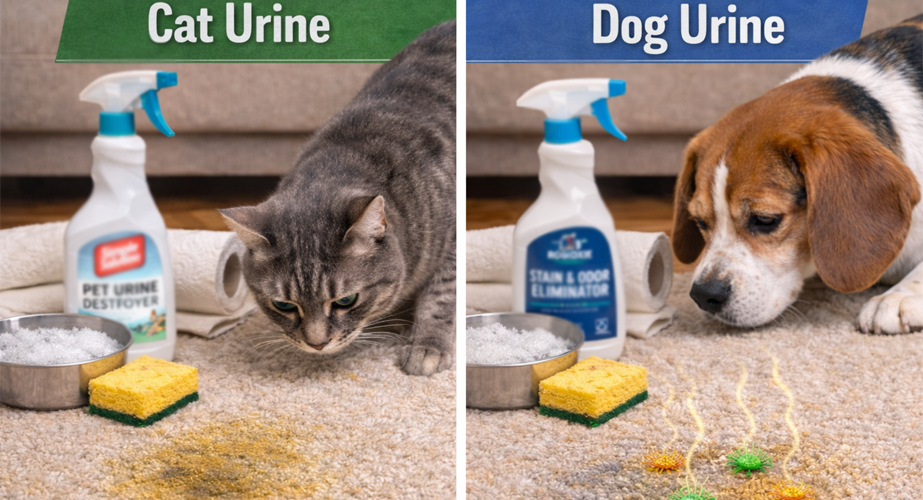
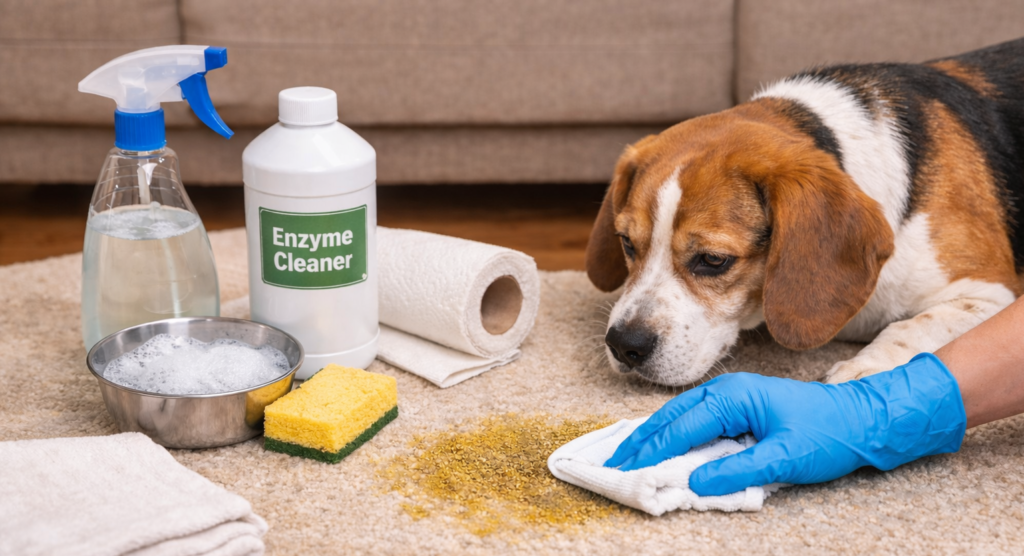
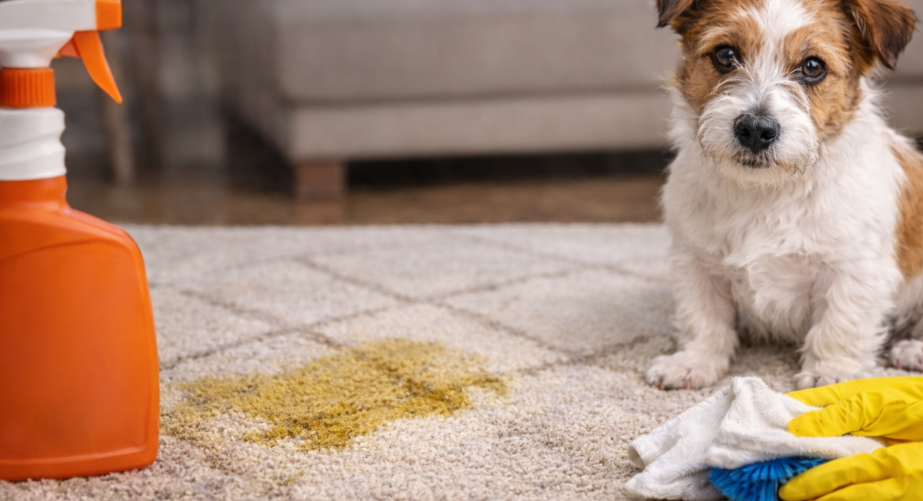
Many people successfully clean a pet urine stain from a rug, only to notice the odor returning days or weeks later. This is one of the most common and frustrating issues with pet accidents on rugs.
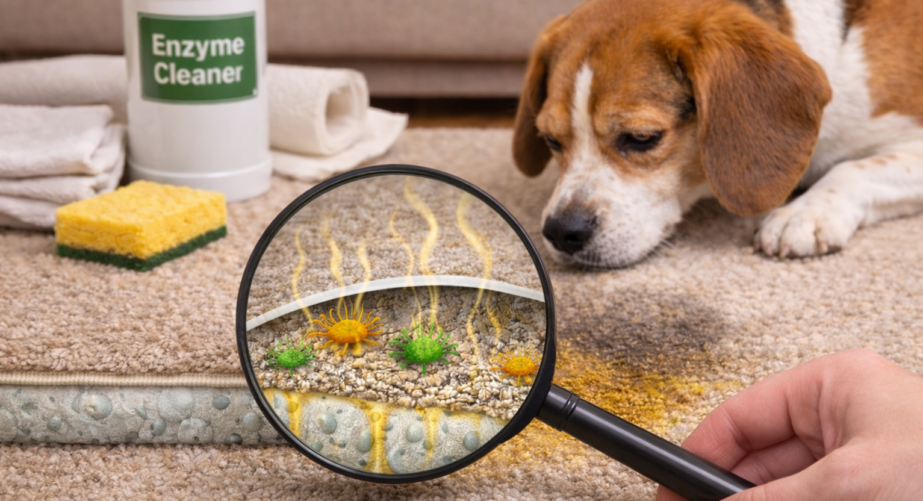
The reason pet urine smells come back is usually not because the rug was cleaned incorrectly, but because urine contamination often goes deeper than it appears on the surface.
This guide explains why pet urine odors return, what mistakes cause lingering smells, and what can be done to prevent the problem from recurring.
Pet urine penetrates deeper than surface fibers
Pet urine is not just a surface issue. It contains uric acid crystals that can bond to rug fibers and backing. Even if the visible stain is removed, these crystals can remain embedded deep in the rug.
When moisture is reintroduced through humidity, cleaning, or spills, the odor can resurface.
This is especially common with:
Thick or dense rugs
Rugs with absorbent backing
Area rugs placed on padding or wood floors
Water reactivates dried urine residue
Water alone does not neutralize uric acid crystals. Instead, it can dissolve them temporarily, allowing odor-causing compounds to release again as the rug dries.
This is why pet urine smells often return after:
Steam cleaning
Shampooing with water-heavy methods
Mopping nearby floors
High indoor humidity
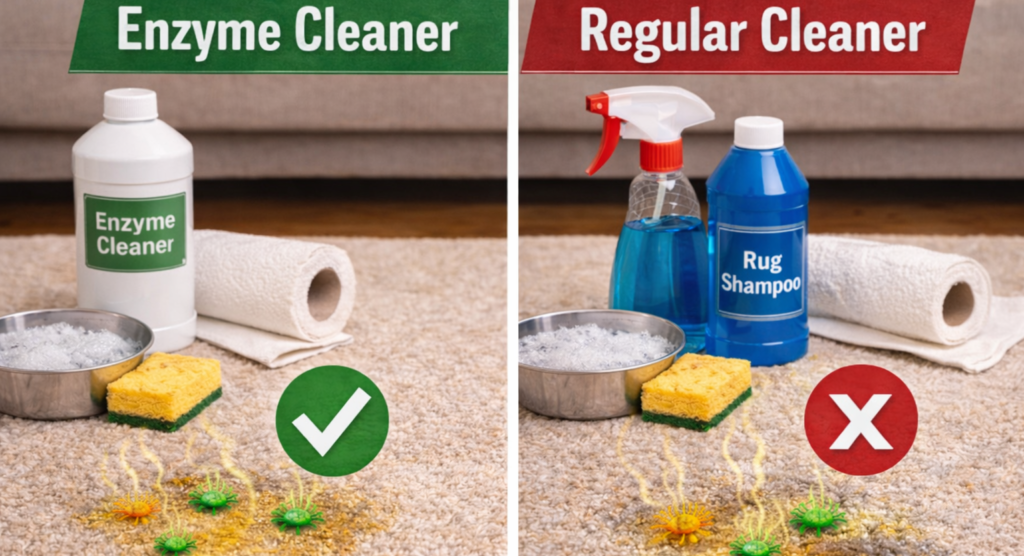
Regular carpet cleaners mask odors instead of removing them
Many standard carpet cleaners are designed to clean visible dirt and add fragrance. They are not designed to break down pet urine crystals.
As a result, odors may seem gone at first, only to return once fragrances fade or moisture reactivates the residue.
Oversaturation pushes urine deeper into the rug
Using too much liquid can push urine contamination further into:
Rug backing
Padding underneath
Subfloor surfaces
Once urine reaches these layers, surface cleaning becomes much less effective.
This is a common issue with:
Pouring cleaners directly onto the stain
Repeated DIY treatments
Aggressive scrubbing
Heat can permanently set urine odors
Heat accelerates chemical bonding. When heat is applied to pet urine residue, odors can become more difficult or impossible to remove.
Enzyme cleaners are often effective, but they must be used correctly.
Common reasons enzyme cleaners do not work include:
Insufficient dwell time
Rug drying too quickly
Incomplete coverage
Old or heavily set-in urine
In some cases, multiple controlled treatments may be required. In others, DIY methods may no longer be effective.
How to prevent pet urine odors from returning
To reduce the chance of recurring odors:
Blot accidents immediately
Use minimal moisture when cleaning
Avoid heat during drying
Allow full drying time
Address repeated pet behavior issues
For delicate rugs, low-moisture or professional cleaning methods are often safer.
When professional rug cleaning is necessary
Professional cleaning is often recommended when:
Odors return repeatedly after cleaning
Urine has soaked into rug backing
The rug is wool, silk, antique, or handwoven
Multiple pet accidents have occurred over time
Professional rug cleaners use controlled methods designed to flush contamination safely without damaging fibers.
Final thoughts
Pet urine smells return because urine contamination is often deeper and more persistent than it appears. Water, heat, and improper cleaning methods can reactivate odors long after the visible stain is gone.
Understanding why this happens helps prevent repeated frustration and unnecessary rug damage. When DIY methods no longer work, professional cleaning may be the safest option.
Affiliate disclosure
This article may contain affiliate links. If you make a purchase through these links, we may earn a commission at no additional cost to you.
 Many people successfully clean a pet urine stain from a rug, only to notice the odor returning days or weeks later. This is one of the most common and frustrating issues with pet accidents on rugs.