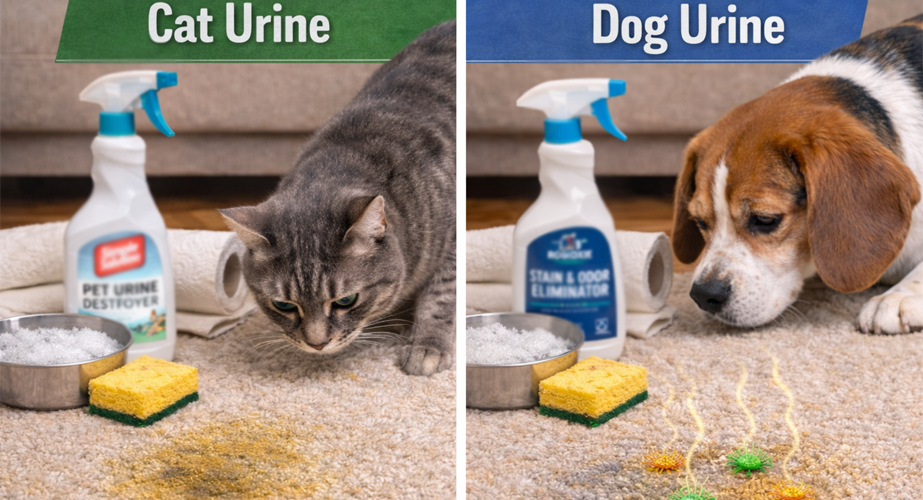
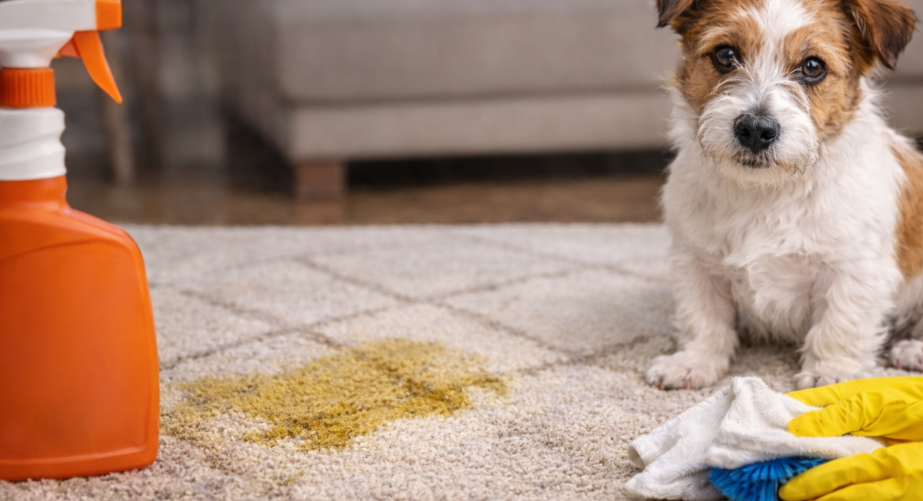
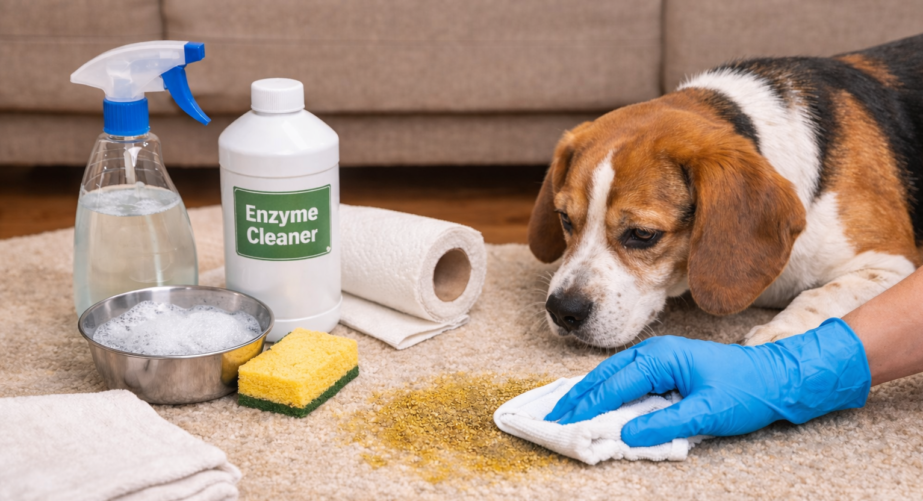
Dog urine in a rug is a common problem, and it can be frustrating when odors return even after cleaning. Rugs are different from wall-to-wall carpet, and urine can soak deep into the fibers and backing, making improper cleaning methods ineffective or even damaging.
This guide explains how to remove dog urine from a rug safely, what to avoid, and when professional cleaning may be the better option.
Why dog urine is especially problematic in rugs
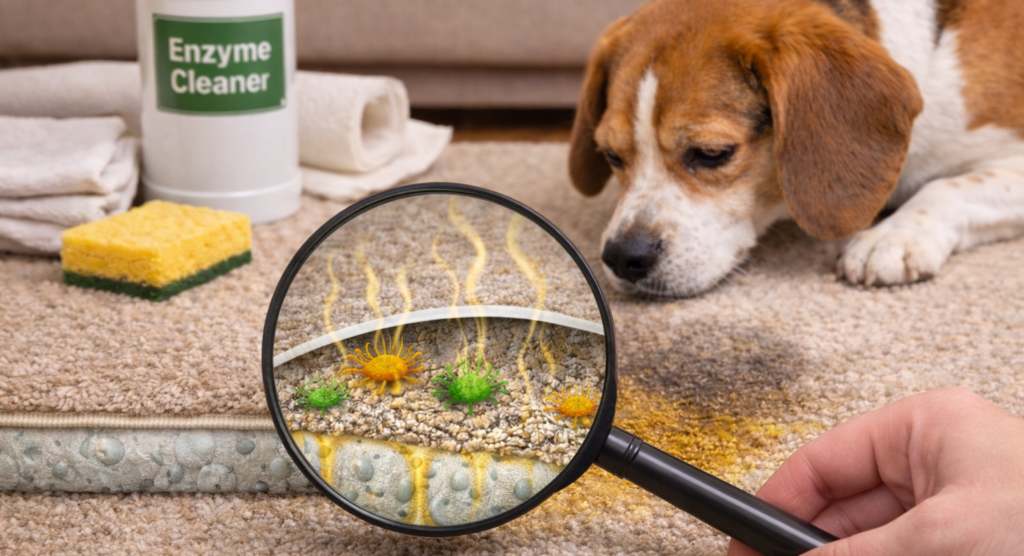
Dog urine is more than just a stain. It contains uric acid crystals, bacteria, and proteins that cause odors to persist and reactivate when moisture is introduced.
Rugs often:
Have dense fibers that trap liquids
Use natural materials like wool or cotton
Include backing that holds moisture
Because of this, surface cleaning alone is often not enough.
Step 1: Blot fresh urine immediately
If the accident is recent, act quickly.
Use clean, dry towels or paper towels
Press firmly to absorb as much liquid as possible
Do not rub or scrub
Blotting removes urine before it spreads deeper into the rug.
Step 2: Avoid water-only cleaning
Using plain water may dilute the stain temporarily, but it often pushes urine deeper into the rug and backing.
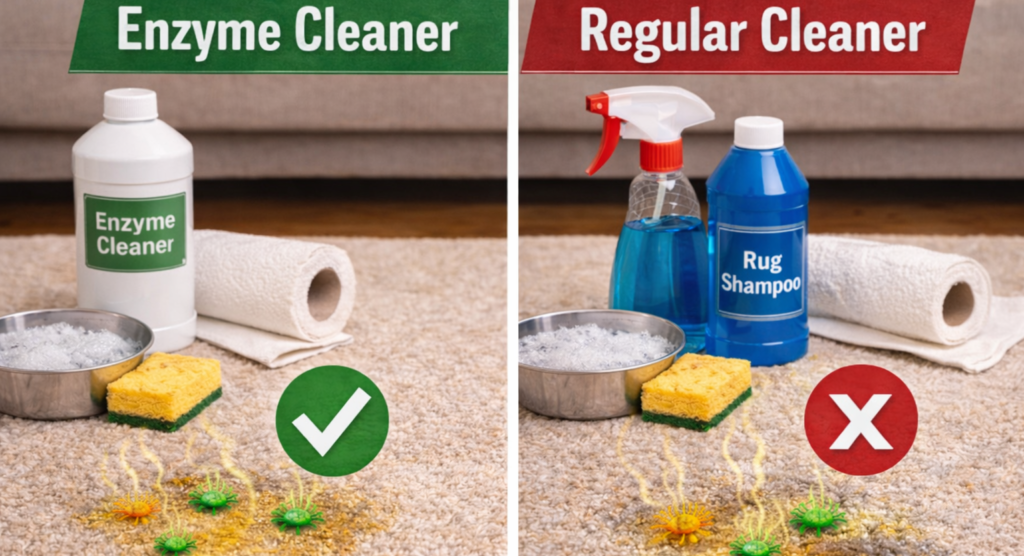
Enzyme cleaners are designed to break down uric acid crystals rather than mask odors.
When using an enzyme cleaner:
Spot test first in an inconspicuous area
Apply sparingly (do not soak the rug)
Allow proper dwell time as directed
Blot excess moisture after treatment
This method works best for synthetic and blended rugs.
Step 4: Use low-moisture methods for wool rugs
For wool or natural fiber rugs, excess moisture can cause:
Shrinkage
Dye bleeding
Fiber damage
In these cases:
Use minimal liquid
Consider dry cleaning powders
Avoid enzyme oversaturation
Light urine odors may be reduced with dry methods, but deep contamination often requires professional care.
Step 5: Neutralize lingering odors properly
If odors persist after cleaning, reapplying cleaner repeatedly can make things worse.
Common mistakes to avoid:
Vinegar or ammonia-based solutions
Scented sprays
Baking soda combined with moisture
These methods often mask odors temporarily but do not eliminate uric acid crystals.
Step 6: Allow the rug to dry completely
Proper drying is critical.
Air dry naturally
Keep the area ventilated
Avoid heaters or hair dryers
Residual moisture can reactivate urine odors later.
When dog urine cannot be removed with DIY methods
DIY cleaning may not work if:
Urine has soaked into the rug backing
The rug has been repeatedly soiled
The rug is wool, silk, antique, or handwoven
Odors return after multiple cleaning attempts
In these situations, professional rug cleaning is often the safest and most effective solution.
Preventing future dog urine accidents on rugs
Prevention helps protect rugs long-term.
Address pet behavior or health issues
Clean accidents promptly
Use washable pads under area rugs
Limit access to high-risk areas
Final thoughts
Removing dog urine from a rug requires the right approach, patience, and realistic expectations. Enzyme-based cleaners can be effective for synthetic rugs when used correctly, while delicate rugs often require low-moisture methods or professional care.
Always spot test, avoid excessive moisture, and stop if you notice discoloration or fiber damage.
Affiliate disclosure
This article may contain affiliate links. If you make a purchase through these links, we may earn a commission at no additional cost to you.
 Dog urine in a rug is a common problem, and it can be frustrating when odors return even after cleaning. Rugs are different from wall-to-wall carpet, and urine can soak deep into the fibers and backing, making improper cleaning methods ineffective or even damaging.